



Obstetrician - Gynaecologist
Doctor of Medicine, University of Athens Medical School
Panagiotis Polyzos, Gynaecologist Obstetrician, is active at the Institute of Life - IVF Unit of Iaso Maternity Hospital.

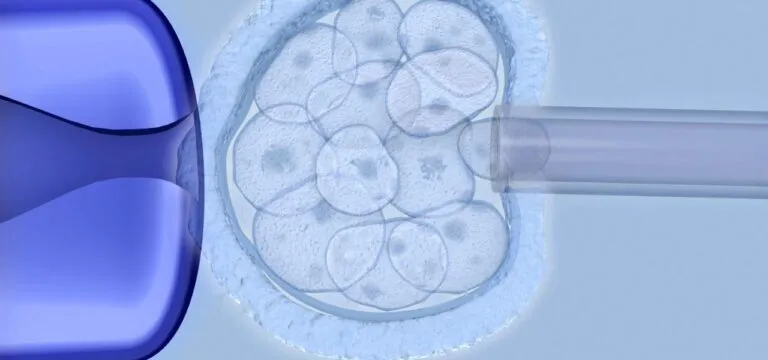
Dr. Preimplantation Genetic Testing (PGT Preimplantation Genetic Testing), is a modern diagnostic methodused to analyze the genetic material, DNA, of embryos prior to implantation.
It is a process that enables the diagnosis of inherited diseases and/or the detection of chromosomal abnormalities in a specific group of couples undergoing assisted reproduction. In this way, it offers couples who carry genes or chromosomes responsible for genetic disorders the possibility of having healthy children. Until recently, this procedure was known as PGS (Preimplantation Genetic Screening) and PGD (Preimplantation Genetic Diagnosis). These terms have now been updated to better reflect the full range of testing procedures performed.
Each human cell contains chromosomes, which are inherited from each parent — 23 from the father and 23 from the mother.
Therefore, every individual has two sets of 23 chromosomes, or 46 in total. Our DNA is organized into small segments called genes. When the function of a gene is altered by a change known as a mutation, this specific sequence can result in a monogenic carrier status (also referred to as a genetic trait).
PGT-A (Preimplantation Genetic Testing for Aneuploidies), also known as PGS (Preimplantation Genetic Screening), is a procedure used to assess the chromosomal status of embryos within the context of assisted reproduction. It examines all 23 pairs of chromosomes and allows for the selection of embryos with the correct number of chromosomes (euploid embryos) to be transferred, increasing the chances of a successful pregnancy and the birth of a healthy baby. PGT-A uses Next Generation Sequencing (NGS) technology to identify embryos that are free from chromosomal abnormalities. As a result, the likelihood of pregnancy is improved, the risk of miscarriage is reduced, and even the transfer of a single embryo can lead to high success rates.

When a couple carries genes responsible for a serious inherited disorder (e.g. Thalassemia, Cystic Fibrosis, which are among the most common), PGT-M (Preimplantation Genetic Testing for Monogenic Disorders) — also known as PGD (Preimplantation Genetic Diagnosis) — is performed to select embryos that do not carry the specific disease. Using a minimally invasive approach, a biopsy at the blastocyst stage is carried out to genetically test the embryos, with a diagnostic accuracy of 99%. Depending on the nature and pathology of the specific gene, the possible diagnostic outcomes are that either the embryo is healthy (does not carry the gene), the embryo is a carrier (carries the mutation from only one parent), or the embryo is affected (has inherited both mutated genes from both parents).
Patients with structural chromosomal abnormalities, such as balanced or unbalanced translocations, face increased risks of embryo implantation failure, high miscarriage rates, and an elevated risk of having children with serious genetic abnormalities. This is due to the high likelihood of producing unbalanced gametes, caused by their chromosomal rearrangement. The most common chromosomal abnormality of this kind is the balanced translocation, found in approximately 0.16% of the general population. It involves an exchange of genetic material between two chromosomes, and it is estimated that around 70% of embryos resulting from a parent with such a translocation are genetically abnormal. The two most frequent structural chromosomal abnormalities are Robertsonian translocations (0.1% of the general population) and inversions (0.02% of the general population).
Preimplantation genetic testing is recommended for couples who carry:
These conditions, if inherited by the offspring, can cause serious health issues from the very early years of the child's life.
Preimplantation Genetic Testing for Aneuploidies can also be considered for couples who do not carry a hereditary condition but present with the following indications:
The goal of Preimplantation Genetic Diagnosis is to help couples have a healthy child and to avoid terminating pregnancies affected by inherited diseases following natural conception. The testing protocol is tailored to the specific hereditary condition and is personalized based on the needs of each couple.
Even if the couple is proven to be fertile, they must undergo an IVF treatment cycle, which includes ovarian stimulation, egg retrieval, fertilization, and culture of the embryos up to the blastocyst stage in the embryology laboratory of INSTITUTE OF LIFE – IASO. We closely monitor embryo development during their time in the lab using the advanced time-lapse incubator: Embryoscope Plus.
Preimplantation genetic testing takes place between the egg retrieval and embryo transfer, and in our laboratory, it is performed at the blastocyst stage, on day 5 or 6. Embryos are biopsied by our highly trained and experienced clinical embryologists. Blastocyst biopsy is a technique carried out before embryo transfer, where 3 to 6 cells are removed from the outer layer of the blastocyst, known as the trophectoderm. These cells undergo genetic/molecular analysis to examine their genetic material. The embryos are then cryopreserved via vitrification until the testing results are available. Following this, embryo transfer is scheduled for the healthy embryos.
Preimplantation Genetic Testing is available for almost any hereditary condition, as long as the exact genetic mutation is known. However, in most cases, a customized test must be developed for each couple intending to use this method.
Therefore, our primary responsibility is to meet with couples, address all their questions, and guide them in the most effective and supportive way to fulfill their dream of having a healthy child.
Since the early stages of Preimplantation Genetic Testing (PGT), the ultimate goal of science has been to assess the genetic composition of embryos without requiring a biopsy of their cells. In recent years, research in this field has intensified, and several international genetics laboratories have already developed platforms for chromosomal anomaly analysis (PGT-A) in blastocysts, using alternative sources of embryonic DNA. This involves genetic analysis of the free DNA found in the culture medium where embryos develop during IVF. This technique is known as non-invasive PGT (niPGT) and is expected to become a clinical reality in the near future. It represents an exciting advancement, which will eliminate the need for embryo biopsy and make chromosomal screening accessible across all IVF cycles. In this scenario, niPGT will be non-invasive, accurate, and low-cost.
ΆΡΙΣΤΗ Με βάση 198 κριτικές
 Δημοσιεύτηκε στο Google
 ΑΛΕΞΑΝΔΡΑ ΚΑΡΑΝΙΚΑΔημοσιεύτηκε στο Google
 Kaiti PaliogianniΔημοσιεύτηκε στο Google
 Beach PinkΔημοσιεύτηκε στο Google
 Amalia GounelaΔημοσιεύτηκε στο Google
 Anna SalapataΔημοσιεύτηκε στο Google
 Christoforos BuciΔημοσιεύτηκε στο Google
 Lilian PapaspyrouΔημοσιεύτηκε στο Google
 Ιωάννα ΖωμένουΔημοσιεύτηκε στο Google
 NANSY CHATZIKONSTADIΔημοσιεύτηκε στο Google
 anastasia almyranti