
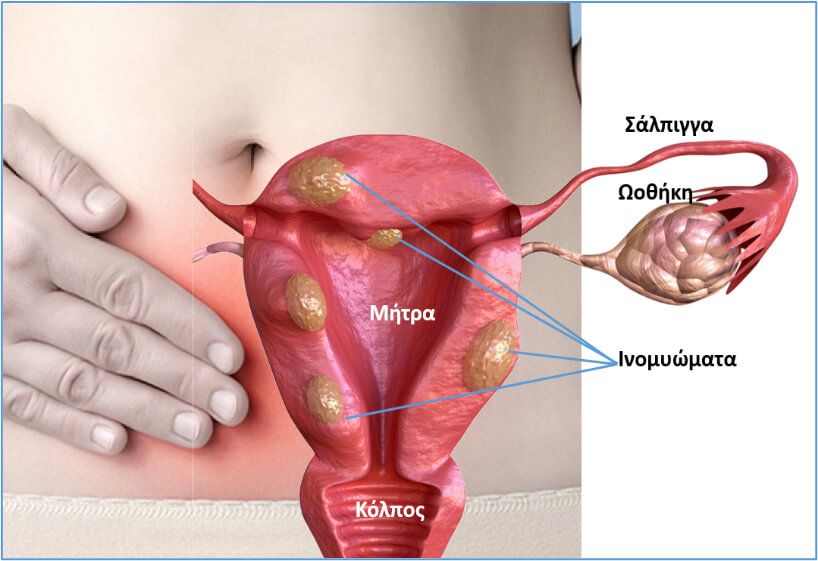
The impact of fibroids on pregnancy depends on their size, number, and location within the uterus.
Pregnant women with uterine fibroids may experience the following:
- Lower abdominal pain: This is the most common complication. The larger the fibroid, the more likely it is to cause pain, especially during the second and third trimesters.
- Miscarriages: These occur mainly in the first trimester and are associated with the number and location of the fibroids. In practical terms, a single fibroid carries a lower risk compared to multiple fibroids, and submucosal fibroids increase the risk more than intramural or subserosal ones.
- First-trimester bleeding: Higher risk in women with submucosal fibroids.
- Placental abruption: Higher risk in women with submucosal and large uterine fibroids.
- Preterm labor.
- Abnormal fetal presentation and dystocia: Large, multiple fibroids—especially those located in the lower uterine segment—increase the likelihood of abnormal fetal presentation and labor difficulties.
- Postpartum hemorrhage: Large fibroids, especially intramural ones, may prevent the uterus from contracting properly after delivery due to disruption of the myometrial fiber architecture.
Management of fibroids during pregnancy depends on the clinical symptoms they cause. In most cases, treatment is conservative, while in rare cases, surgical intervention may be necessary.
Management of fibroids during pregnancy depends on the clinical symptoms they cause. In most cases, treatment is conservative, while in rare cases, surgical intervention may be necessary.
It has also been observed that the rates of spontaneous miscarriages increase significantly in pregnant women with fibroids compared to those without (14% versus 7.6%, respectively). The mechanism by which fibroids cause spontaneous miscarriages remains unclear.
Bleeding in early pregnancy may be related to the location of the fibroid. The frequency of first-trimester bleeding is significantly higher in pregnancies where the placenta implants over or near a fibroid, compared to pregnancies in which there is no contact between the placenta and the fibroid.
Regarding preterm labor and premature rupture of membranes, pregnant women with fibroids are much more likely to deliver preterm than women without fibroids (16.1% versus 8.7% and 16% versus 10.8%, respectively). In cases of multiple fibroids that come into direct contact with the placenta, the risk of preterm delivery appears to be substantially increased. In contrast, fibroids do not seem to be a risk factor for premature rupture of membranes.
Fetal growth does not appear to be significantly affected by the presence of uterine fibroids. However, research shows that pregnant women with fibroids have a slightly increased risk of delivering a baby with intrauterine growth restriction (IUGR).
Additionally, it is worth noting that certain fetal abnormalities have been reported in women with large submucosal fibroids, such as lateral compression of the fetal skull, abnormal twisting of the fetal neck, and defects of the upper and lower limbs.
Finally, pain is the most common complication of fibroids during pregnancy. Symptoms can usually be managed with conservative treatment (rest, hydration, and analgesics), although in rare cases definitive surgical removal may be required.
Ο obstetrician must always be prepared to recognize and manage any potential complications.
Should a fibroid be removed before pregnancy?
What we know is that pregnancy can increase the size of a fibroid, because the estrogen levels that rise during pregnancy tend to stimulate its growth.
A woman with a uterine fibroid who is planning a pregnancy or wishes to undergo in vitro fertilization should discuss with her gynecologist whether the fibroid needs to be removed to avoid potential problems later in the course and the healthy progression of the pregnancy.
If a fibroid is small and located on the outside of the uterus, it is not necessary to remove it before pregnancy. However, when it is inside or near the uterine cavity, removal is recommended since—aside from making conception more difficult—it may grow larger due to pregnancy hormones and negatively affect the pregnancy.
When is pregnancy possible after fibroid removal surgery?
After undergoing fibroid removal surgery, a woman can usually become pregnant 4 to 6 months later. If the fibroid is pedunculated and does not affect the uterine body, pregnancy may be allowed sooner.
Finally, it is important to emphasize that even if fibroids do not cause problems, they should not be allowed to grow too large, as the treatment options become more limited. In general, a fibroid larger than 5 centimeters is best removed, regardless of whether it causes symptoms or not.
Treatment & Management
As a general rule, fibroids located inside the uterus are treated with hysteroscopic removal, while the remaining fibroids are usually managed with laparoscopy or robotic surgery.