
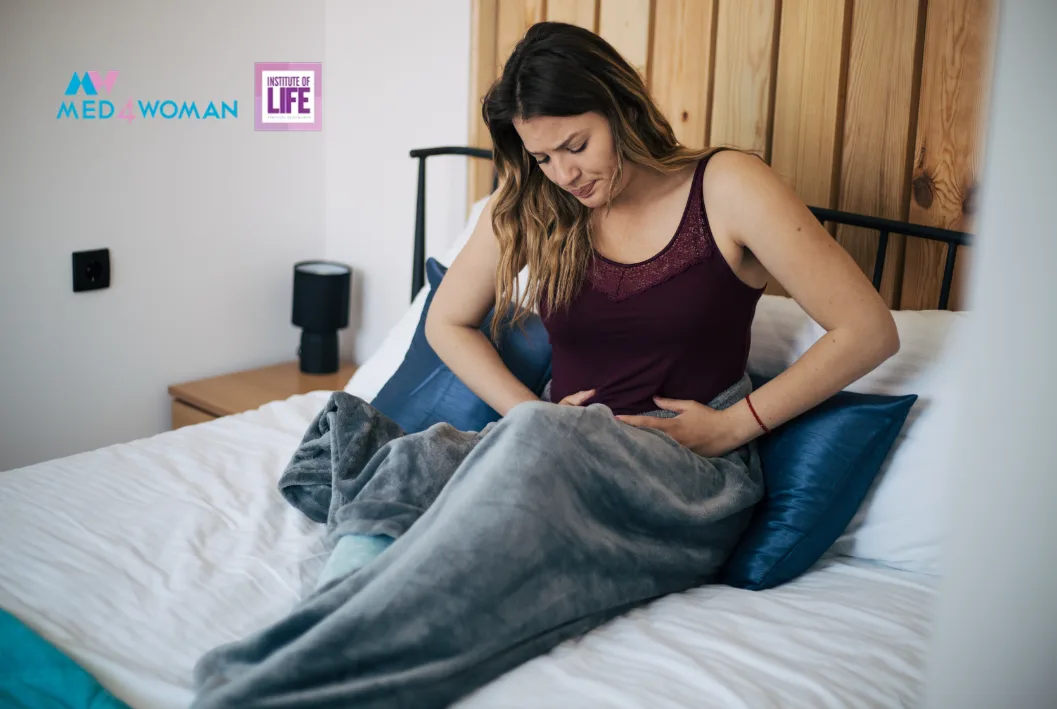
Menstruation is a natural process that every woman goes through. The average amount of blood lost is about 35 mL, although amounts from 10 to 80 mL are also considered normal. Essentially, it is the shedding of the endometrium, the inner lining of the uterus. The length and intensity of menstruation differ from woman to woman: the menstrual cycle ranges from 21 to 35 days, and bleeding usually lasts from 2 to 7 days. In this article, we look at what menstruation is, which symptoms come with it and how we can manage it without stress and discomfort.
Understanding menstruation: the first step to managing it better
Understanding the biological mechanisms behind menstruation is the foundation for managing it effectively. The menstrual cycle is regulated by the hypothalamic-pituitary-ovarian axis, a complex hormonal process that starts in the brain. Specifically, the hypothalamus releases the hormone GnRH, which stimulates the pituitary gland to secrete the hormones FSH and LH. These in turn act on the ovaries, which produce estrogen and progesterone to prepare the endometrium.
Along with these hormonal changes, various symptoms appear that vary from woman to woman. Physical symptoms include abdominal or lower back pain, cramps, headache, fatigue and breast tenderness. In addition, many women experience psychological symptoms such as mood changes, irritability, anxiety or depression. Tracking your cycle helps you understand what is normal for you personally and spot significant changes. A change is considered a disorder if it repeats for at least two to three consecutive cycles. So, knowing your body is the first step toward reducing stress and discomfort.
Effective strategies for more comfortable period days
Choosing the right hygiene products is the basis for comfortable period days. Pads are easy to use and are an ideal choice for overnight use, while tampons allow greater freedom of movement and can even be used for swimming. Menstrual cups are a sustainable option that can be worn for up to 12 hours before emptying. For good hygiene, pads should be changed every 4 to 6 hours, and tampons should not stay in for more than 8 hours.
Heat is one of the most effective ways to find relief. A hot water bottle on the abdomen relaxes the muscles, boosts blood circulation and reduces pain. In addition, gentle exercise such as walking and yoga increases the release of endorphins, which act as a natural painkiller, while inhibiting the production of the prostaglandins that cause cramps.
At the same time, clothing plays an important role. Choose loose, breathable clothes and cotton underwear that let air circulate. Drinking plenty of water prevents bloating and cramps, and it helps to avoid caffeine and salty foods, which make symptoms worse.
Natural, healthy habits that reduce discomfort
What we eat directly affects how intense menstrual symptoms are. The Mediterranean diet, rich in olive oil, fish with omega-3 fatty acids, fruit and vegetables, has anti-inflammatory properties that reduce pain. Magnesium helps relax the uterine muscles and relieve cramps, while calcium and vitamin D reduce mood swings. B-complex vitamins can reduce the occurrence of premenstrual syndrome by 35%.
In particular, choose leafy greens such as spinach, dark chocolate for iron and magnesium, oily fish for its anti-inflammatory action and legumes for protein. At the same time, avoid caffeine, alcohol and processed foods. Herbs are valuable allies: turmeric inhibits the prostaglandins that cause pain, ginger has an effect similar to painkillers, and chamomile relaxes the uterus. Chasteberry (vitex) improves hormonal balance. Dietary supplements such as Erbofemin, which contains turmeric in the patented Meriva® form with 29 times greater absorption, plus magnesium, offer natural relief.
Stress and periods: a two-way relationship
Stress is not only a consequence of a difficult period. It can also be a cause. Chronic tension raises cortisol, which affects the hypothalamus and can shift ovulation, leading to a more irregular cycle. At the same time, pain becomes stronger when the body is tense and sleep is short.
Break the cycle with small, concrete steps:
- Diaphragmatic breathing: breathe in through your nose for a count of four, then breathe out slowly for a count of six. Five minutes is enough to relax your abdomen.
- Predictability: when you know when your period is coming, it does not catch you off guard. Simply noting the date reduces stress more than you might think.
- Fewer commitments on difficult days: if the first two days are the heaviest, avoid scheduling demanding meetings then, where possible.
Plan your month around your cycle
Your cycle does not only affect the days of bleeding. Many women notice that they have more energy in the first half of the cycle and more fatigue or sensitivity in the days before their period. There is no single pattern for everyone, but you can learn your own.
For three months, keep notes in an app or a simple diary:
- the day bleeding starts and ends
- how heavy each day was, on a scale of 1 to 3
- pain, mood, sleep and energy
- any medication you needed
With this information you can plan workouts, trips or exams on your “good” days. And if you need to see a doctor, you will have data instead of memories. If physical and emotional period symptoms appear every month before bleeding starts, that is exactly what your doctor will want to see.
Periods at work, at school and at university
Worrying about leaks is one of the most common causes of stress. A little organization reduces it considerably:
- A small pouch in your bag with two pads or tampons, a panty liner, wipes and spare underwear.
- Dark clothes on your heaviest days, if that makes you feel more comfortable.
- Combining products on heavy days, for example a tampon or cup together with period underwear.
- Your painkiller with you, so you can take it when the pain starts and not once it has peaked.
If your period often forces you to miss work or school, this is not something you have to “put up with.” It is a reason for an evaluation. Severe period pains and very heavy flow can be treated.
First periods: a guide for teenage girls and parents
The first period usually comes between the ages of 10 and 15. For the first one to two years the cycle is often irregular, because ovulation does not yet happen in every cycle. This is expected and nothing to worry about.
What helps a girl feel safe:
- An open, calm conversation before the first period, in simple words and without shame.
- A ready-made “kit” in her school bag, so she does not have to ask for help if she does not want to.
- An explanation of the different products. Tampons and cups can be used from the start, as long as the girl feels comfortable.
A visit to a gynecologist is needed if periods have not started by age 15, if bleeding lasts more than seven days or requires changing protection every hour, or if pain causes her to miss school.
Sleeping without leaks or worry
For many women, nighttime is the most stressful part. Flow often increases when you get up in the morning, because blood collects while you are lying down.
- Longer overnight pads with wings or high-absorbency period underwear.
- A menstrual cup, which can stay in for up to about 12 hours and covers the whole night.
- Lying on your side with your knees bent toward your abdomen, which relaxes the abdominal muscles and eases cramps.
- A dark protective sheet on the mattress, so you can sleep without a second thought.
Tampons can be used at night only if they will not stay in for more than eight hours.
Period underwear, cup or disc: how to choose
In recent years the options have multiplied. There is no “best” product, only the one that suits your flow, your body and your daily routine.
- Period underwear: washable and reusable. Comfortable for light days, for nighttime or as a backup with a tampon. You need several pairs to cover the whole period.
- Menstrual cup: made of medical-grade silicone, it collects blood instead of absorbing it. It lasts for many years. It takes a few cycles to get used to and needs to be sterilized by boiling at the end of each period.
- Menstrual disc: it sits higher, at the back of the vagina. Some women find it more comfortable than a cup, especially when the cervix is low.
- Tampons and pads: they remain simple and reliable options. Choose the absorbency you need each day, not always the highest.
If you have an IUD, ask your doctor before using a cup or disc. Suction during removal has been linked to IUD displacement in some cases.
Sex during your period
Having sex during your period is not dangerous, and for some women it even eases cramps, thanks to the relaxation that follows orgasm. It is a matter of personal choice.
Two things to keep in mind. First, pregnancy is less likely but not impossible, especially with short cycles, where ovulation can happen a few days after bleeding ends. Second, the risk of sexually transmitted infections, such as chlamydia, is not reduced, quite the opposite. Condoms remain essential outside a stable relationship.
Toxic shock syndrome: rare, but you should recognize it
This is a rare but serious condition caused by bacterial toxins and has been linked mainly to tampons that are left in for many hours or have excessive absorbency. It has also been described, more rarely, with menstrual cups.
Remove the tampon or cup immediately and seek emergency help if you develop:
- a sudden high fever
- vomiting or diarrhea
- a red rash that looks like sunburn
- dizziness, feeling faint or confusion
Prevention is simple: change your tampon every 4 to 8 hours, use the lowest absorbency you need and wash your hands before and after inserting it.
Conclusion
Managing your period does not have to come with stress and discomfort. Without a doubt, understanding your body, choosing the right products, using heat and gentle exercise, and following a balanced diet with natural aids are the key to comfortable period days. Try these strategies and find out which work best for you, creating a personal routine that brings you relief and comfort.
Frequently Asked Questions
What gives quick relief from period pain?
A hot water bottle on your abdomen, gentle movement and an anti-inflammatory painkiller from the first hour of symptoms, as long as you have no contraindication. More in our guide to period pain.
Is it OK to exercise during your period?
Yes, and it usually helps. Walking, yoga and gentle aerobic exercise reduce cramps and improve mood. Listen to your body and lower the intensity if needed.
Which foods help and which make things worse?
Foods rich in iron, magnesium and omega-3s, fruit, vegetables and plenty of water help. Too much salt, sugar, alcohol and excessive caffeine increase bloating and irritability.
How much blood loss is normal?
About 30 to 80 ml per period. If you change a pad or tampon every one to two hours, pass large clots or your period lasts longer than 7 days, it is probably heavy menstrual bleeding.
When should I see a gynecologist?
When pain keeps you away from work or school, when it does not ease with simple painkillers, when bleeding is very heavy or when your cycle suddenly becomes irregular.
Can stress delay your period?
Yes. Intense or prolonged stress affects the hormones that regulate ovulation and can delay your period by a few days or even weeks. If the delay keeps happening or there is a chance of pregnancy, read about the causes of a late period.
Is a menstrual cup hygienic?
Yes, as long as you rinse it every time you empty it and sterilize it in boiling water at the end of your period. Made of medical-grade silicone, it contains no fragrances or bleach and does not dry out the vagina. It takes some getting used to, so try it first on a day when you are at home.
Is it normal to be more irritable before my period?
Mild mood changes in the days before your period are very common and are caused by hormonal fluctuations. However, if irritability or sadness affects your relationships and work every month, talk to your doctor, because there are effective solutions.
Is period underwear enough for heavy flow?
There is high-absorbency underwear, but on the heaviest days it is usually not enough on its own for the whole day. Many women combine it with a tampon or cup. If you need to change every one to two hours, your flow is unusually heavy and a medical checkup is worthwhile.
Can I get pregnant if I have sex during my period?
The chance is small but real. Sperm survive for up to about five days, so in a short cycle ovulation can fall within that window. If you do not want to get pregnant, use contraception on your period days too.