

Preimplantation Genetic Testing (PGT)
What is Preimplantation Genetic Testing (PGT)?
The Preimplantation Genetic Testing (PGT) is a modern diagnostic method, used to analyze the genetic material, DNA, of embryos prior to implantation.
It is a process that enables the diagnosis of inherited diseases and/or the detection of chromosomal abnormalities in a specific group of couples undergoing assisted reproduction. In this way, it offers couples who carry genes or chromosomes responsible for genetic disorders the possibility of having healthy children. Until recently, this procedure was known as PGS (Preimplantation Genetic Screening) and PGD (Preimplantation Genetic Diagnosis).
These terms have now been updated to better reflect the full range of testing procedures performed.
Preimplantation Genetic Testing is divided into the following categories:
- Aneuploidies (abnormal number of chromosomes) (PGT-A)
- Inherited monogenic disorders (PGT-M)
- Inherited chromosomal abnormalities (balanced and unbalanced translocations, and numerical abnormalities) (PGT-SR)
In more detail:
Each human cell contains chromosomes, which are inherited from each parent: 23 from the father and 23 from the mother.
Therefore, every individual has two sets of 23 chromosomes, or 46 in total. Our DNA is organized into small segments called genes. When the function of a gene is altered by a change known as a mutation, this specific sequence can result in a monogenic carrier status (also referred to as a genetic trait).
Preimplantation Genetic Testing for Aneuploidies (PGT-A)
PGT-A (Preimplantation Genetic Testing for Aneuploidies), also known as PGS (Preimplantation Genetic Screening), is a procedure used to assess the chromosomal status of embryos within the context of assisted reproduction. It examines all 23 pairs of chromosomes and allows for the selection of embryos with the correct number of chromosomes (euploid embryos) to be transferred, increasing the chances of a successful pregnancy and the birth of a healthy baby. PGT-A uses Next Generation Sequencing (NGS) technology to identify embryos that are free from chromosomal abnormalities. As a result, the likelihood of pregnancy is improved, the risk of miscarriage is reduced, and even the transfer of a single embryo can lead to high success rates.
Preimplantation Genetic Testing for Monogenic Disorders (PGT-M)
When a couple carries genes responsible for a serious inherited disorder (e.g. thalassemia and cystic fibrosis, which are among the most common), PGT-M (preimplantation genetic testing for monogenic disorders), also known as PGD (preimplantation genetic diagnosis), is performed to select embryos that do not carry the specific disease. Using a minimally invasive approach, a biopsy at the blastocyst stage is carried out to genetically test the embryos, with a diagnostic accuracy of 99%. Depending on the nature and pathology of the specific gene, the possible diagnostic outcomes are that either the embryo is healthy (does not carry the gene), the embryo is a carrier (carries the mutation from only one parent), or the embryo is affected (has inherited both mutated genes from both parents).
Preimplantation Genetic Testing for Structural Chromosomal Rearrangements (PGT-SR)
Patients with structural chromosomal abnormalities, such as balanced or unbalanced translocations, face increased risks of embryo implantation failure, high miscarriage rates, and an elevated risk of having children with serious genetic abnormalities. This is due to the high likelihood of producing unbalanced gametes, caused by their chromosomal rearrangement. The most common chromosomal abnormality of this kind is the balanced translocation, found in approximately 0.16% of the general population. It involves an exchange of genetic material between two chromosomes, and it is estimated that around 70% of embryos resulting from a parent with such a translocation are genetically abnormal. The two most frequent structural chromosomal abnormalities are Robertsonian translocations (0.1% of the general population) and inversions (0.02% of the general population).
Who should undergo Preimplantation Genetic Testing?
Preimplantation genetic testing is recommended for couples who carry:
- Autosomal dominant or recessive monogenic disorders
- Monogenic disorders linked to the sex chromosomes (PGT-M)
- Structural chromosomal abnormalities, such as balanced or unbalanced translocations (PGT-SR)
These conditions, if inherited by the offspring, can cause serious health issues from the very early years of the child’s life.
Preimplantation Genetic Testing for Aneuploidies can also be considered for couples who do not carry a hereditary condition but present with the following indications:
- Advanced Maternal Age (AMA)
- History of Recurrent Implantation Failure (RIF)
- History of Recurrent Miscarriages (RM)
- History of a previous pregnancy with an abnormal karyotype
- Desire to select a single euploid embryo for transfer to avoid multiple pregnancies
Procedure: How is Preimplantation Genetic Testing performed?
The goal of preimplantation genetic diagnosis is to help couples have a healthy child and to avoid terminating pregnancies affected by inherited diseases following natural conception.
The testing protocol is tailored to the specific hereditary condition and is personalized based on the needs of each couple.
Even if the couple is proven fertile, they must enter a program of IVF (in vitro fertilization), which includes stimulation of the woman’s ovaries, egg retrieval, fertilization and culture to the blastocyst stage in the embryology laboratory of the Institute of Life IASO. We monitor embryo development throughout their stay in the laboratory with the help of the modern time-lapse incubator: Embryoscope plus.
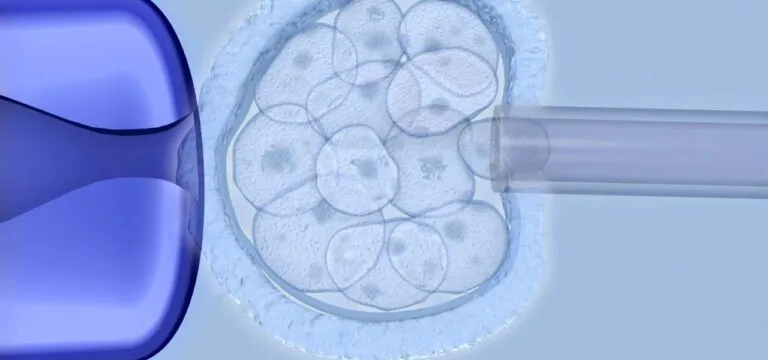
Preimplantation genetic testing takes place between the egg retrieval and embryo transfer, and in our laboratory, it is performed at the blastocyst stage, on day 5 or 6. Embryos are biopsied by our highly trained and experienced clinical embryologists. Blastocyst biopsy is a technique carried out before embryo transfer, where 3 to 6 cells are removed from the outer layer of the blastocyst, known as the trophectoderm. These cells undergo genetic/molecular analysis to examine their genetic material. The embryos are then cryopreserved via vitrification until the testing results are available.
Following this, embryo transfer is scheduled for the healthy embryos.
Preimplantation Genetic Testing is available for almost any hereditary condition, as long as the exact genetic mutation is known. However, in most cases, a customized test must be developed for each couple intending to use this method.
Therefore, our primary responsibility is to meet with couples, address all their questions, and guide them in the most effective and supportive way to fulfill their dream of having a healthy child.
Non-Invasive Preimplantation Genetic Testing for Aneuploidies (niPGT-A)
Since the early stages of preimplantation genetic testing (PGT), the ultimate goal of science has been to assess the genetic composition of embryos without requiring a biopsy of their cells.
In recent years, research in this field has intensified, and several international genetics laboratories have already developed platforms for chromosomal anomaly analysis (PGT-A) in blastocysts, using alternative sources of embryonic DNA. This involves genetic analysis of the free DNA found in the culture medium where embryos develop during IVF. This technique is known as non-invasive PGT (niPGT) and is expected to become a clinical reality in the near future. It represents an exciting advancement, which will eliminate the need for embryo biopsy and make chromosomal screening accessible across all IVF cycles. In this scenario, niPGT will be non-invasive, accurate, and low-cost.
How to read preimplantation genetic testing results
After the biopsy, each embryo receives a classification. Understanding it helps you discuss the next steps with your doctor without anxiety or misunderstandings.
- Euploid: the embryo has the correct number of chromosomes or, in PGT-M, is not affected by the specific disease. It is the priority embryo for transfer.
- Aneuploid: a chromosome is missing or extra. Most such embryos do not implant or lead to miscarriage, which is why they are usually not transferred.
- Mosaic: the sample contains some cells with a normal and some with an abnormal number of chromosomes. Some mosaic embryos have led to healthy births, but with a lower chance of implantation. Their transfer is considered only after genetic counseling and when no euploid embryo is available.
- No result: the DNA was not amplified sufficiently. In some cases the embryo can be thawed and biopsied again.
The laboratory report should always be explained by a doctor or geneticist. One word in a table is not enough for decisions of such weight.
The limits of PGT: what it cannot guarantee
Testing is a powerful tool, but not a cure-all. Before choosing it, you need to know what it does not do:
- It does not guarantee pregnancy. A euploid embryo has a better chance of implantation, but success also depends on the uterus, the endometrium and other factors.
- It does not create healthy embryos. Testing does not increase the number of normal embryos. It simply identifies them.
- It does not test for everything. PGT-A looks for differences in the number of chromosomes. It does not detect every single-gene disease or every small structural abnormality.
- It does not replace testing during pregnancy. The biopsy examines cells from the future placenta, not from the embryo itself. That is why, in every pregnancy after PGT, prenatal screening still has its place.
What the data show about PGT-A
Randomized studies show that PGT-A can reduce miscarriages per transfer and the number of unsuccessful transfers, mainly in older women. However, it has not been shown to increase the overall chance of a live birth per stimulation cycle for all women. The European Society of Human Reproduction and Embryology (ESHRE) does not recommend it as a routine test. The decision should be individualized.
Preparing for PGT-M: genetic counseling and test design
For single-gene diseases, the laboratory does not use a ready-made test. It designs a test specifically for your family’s mutation. The process has specific steps:
- Genetic counseling: a clinical geneticist confirms the diagnosis and explains the pattern of inheritance and the risk for each embryo.
- Confirming the mutation: a written genetic report stating the exact mutation is required. Without it, the test cannot be designed.
- Samples from relatives: blood or saliva from parents or from an affected child is often requested, to increase the reliability of the analysis.
- Building and validating the test: usually takes several weeks. Start the process before ovarian stimulation.
In Greece, beta-thalassemia is one of the most common indications for PGT-M. When both partners are carriers, each pregnancy has a 25% chance of an affected child. Preimplantation testing gives them the option to avoid this risk before a pregnancy even begins.
Timeline of a cycle with preimplantation genetic testing
A cycle with PGT takes longer than a standard IVF cycle. The typical course is as follows:
- Weeks 0 to 2: ovarian stimulation and egg retrieval.
- Days 5 to 7 after egg retrieval: the blastocysts are biopsied and vitrified.
- About 1 to 3 weeks: waiting for the results from the genetics laboratory.
- The next cycle or the one after: preparation of the endometrium and embryo transfer of a tested embryo.
Frozen embryo transfer is now the rule after PGT and, thanks to modern vitrification, does not reduce the chances. In most cases a single embryo is transferred, to avoid a multiple pregnancy.
If no suitable embryo results, the experience is difficult. The result still provides information: it prevents a transfer that would most likely end in failure or miscarriage and helps plan the next step.
Legal framework of preimplantation genetic testing in Greece
In Greece, preimplantation genetic testing is permitted under the law on medically assisted reproduction (Law 3305/2005) and under the supervision of the National Authority for Medically Assisted Reproduction. The key principles are:
- Testing is done for medical reasons, mainly to prevent serious hereditary diseases.
- Sex selection for non-medical reasons is not allowed. It is allowed only when it aims to avoid a serious sex-linked disease.
- The couple’s written consent is required, after full information.
The couple also decides what will happen to the embryos that are not transferred. This decision is discussed and recorded in advance, so that it does not have to be made under pressure.
Frequently Asked Questions
What is the difference between PGT-A, PGT-M and PGT-SR?
PGT-A checks the number of chromosomes, PGT-M a specific single-gene disorder and PGT-SR structural chromosomal rearrangements.
Does the biopsy harm the embryo?
A biopsy at the blastocyst stage removes a few cells from the part that will become the placenta. In experienced laboratories, the effect on implantation is minimal.
Is the result 100% accurate?
No. Accuracy is very high, but confirmation with prenatal testing during pregnancy is recommended.
Which couples is it recommended for?
Carriers of hereditary diseases or chromosomal translocations, and selected cases of advanced age, recurrent miscarriage or implantation failure.
Does PGT-A increase the chances of pregnancy?
It increases the chance per embryo transfer and reduces miscarriages. It does not increase the total number of healthy embryos in a cycle.
How long does it take to get the results?
Usually 1 to 3 weeks after the biopsy, depending on the laboratory and the type of test. During this time the embryos remain safely vitrified.
Can we choose the sex of the embryo?
Not for non-medical reasons. Greek law allows sex selection only when the goal is to avoid a serious hereditary sex-linked disease.
What happens if all embryos turn out to be aneuploid?
No transfer takes place in that cycle. Your doctor will discuss your age, ovarian reserve and the cycle data with you, and whether a new cycle, a change of protocol or another option, such as egg donation, makes sense.
Does preimplantation genetic testing help with recurrent miscarriage?
When the cause is chromosomal, such as a balanced translocation in one of the parents, PGT-SR can reduce the risk of another miscarriage. Before that, you need a full investigation of recurrent miscarriage, because there are other causes as well.