Gynecology, Pregnancy and Fertility Blog

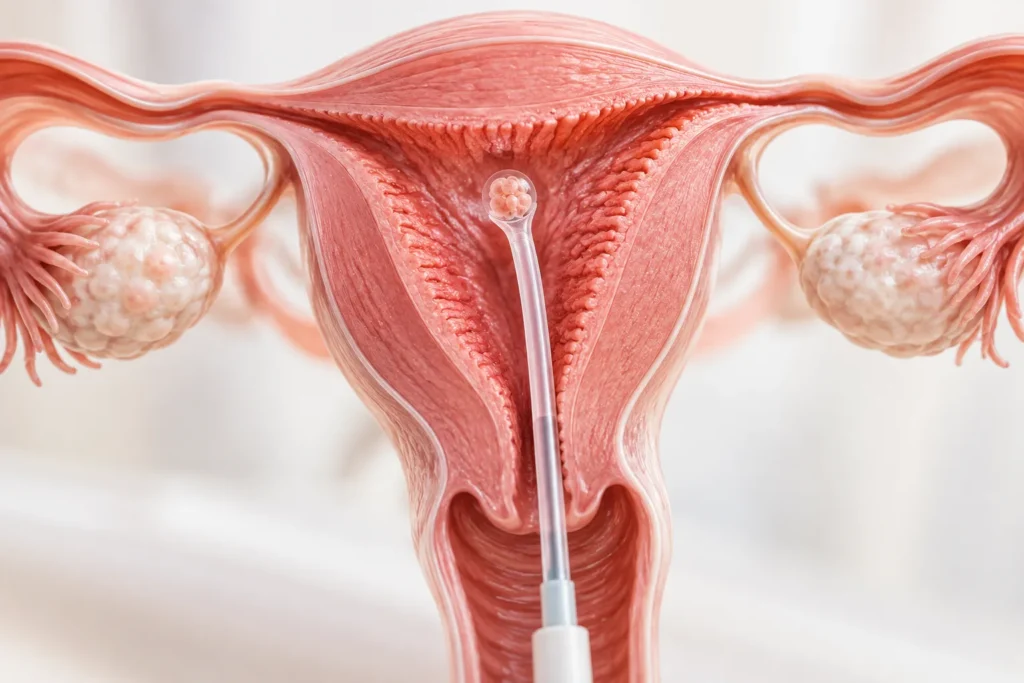
Endometrial thickness before embryo transfer on ultrasound

Endometrial Thickness and Embryo Transfer: How Important Is It for Implantation?

Before an embryo transfer, endometrial thickness is one of the factors the medical team checks. The measurement matters, but on its own it is not enough to predict implantation. It is assessed together with the endometrial pattern, the protocol, the history and the characteristics of the embryo. What Is...

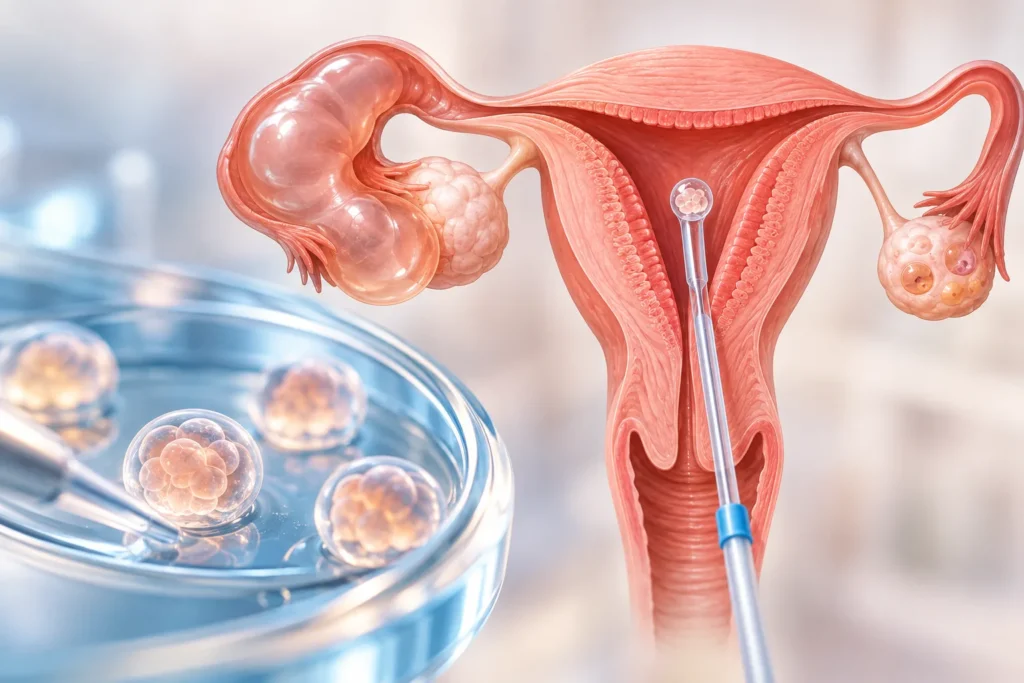
Hydrosalpinx and IVF

Hydrosalpinx and IVF: How Does It Affect Implantation and When Does It Need Treatment?

A diagnosis of hydrosalpinx before IVF (in vitro fertilization) often raises questions: since the treatment bypasses the fallopian tubes, why does a blocked tube need to be treated? The explanation lies in the fluid that can flow back into the uterus and affect implantation before the embryo transfer. Assessing the hydrosalpinx is...

Hypertension in pregnancy

Low-Dose Aspirin (Salospir) in Pregnancy: Why It Is Prescribed, Dose and Safety

Salospir is one of the drugs most often prescribed in pregnancy, and one of those that raise the most questions. Aspirin for a pregnant woman? The answer is yes, at a low dose and for specific reasons. In women at increased risk, it significantly reduces the likelihood of preeclampsia. But it is not a drug for everyone, and...

Symptoms after embryo transfer

Symptoms After Embryo Transfer: A Guide to the Two-Week Wait

The days after an embryo transfer are among the most emotionally charged moments of IVF treatment. Every small discomfort, every change in the body, even the absence of any symptom, can become a source of intense anxiety. In this article we explain which symptoms after embryo transfer are expected, when a pregnancy test becomes reliable...

Anti-Mullerian hormone

Anti-Mullerian Hormone (AMH): Levels by Age and Fertility

Anti-Müllerian Hormone (AMH) is today one of the most reliable and widely used markers for assessing female fertility. With a simple blood test, the gynecologist can gain important information about the “ovarian reserve,” that is, the number of eggs the ovaries have at a given time. In...

Perimenopause symptoms

Perimenopause: Symptoms, Age and How to Manage It

Many women around 40 notice changes that worry them: the cycle gets shorter or longer for no reason, sleep becomes more unsettled, mood swings, hot flashes appear. No, it is not “all in their head.” In reality, the body has already entered an important transitional phase. In this article we explain...

CONTACT Call Us